July 17, 2026
The Role of Oil Self-Massage in Daily Routine
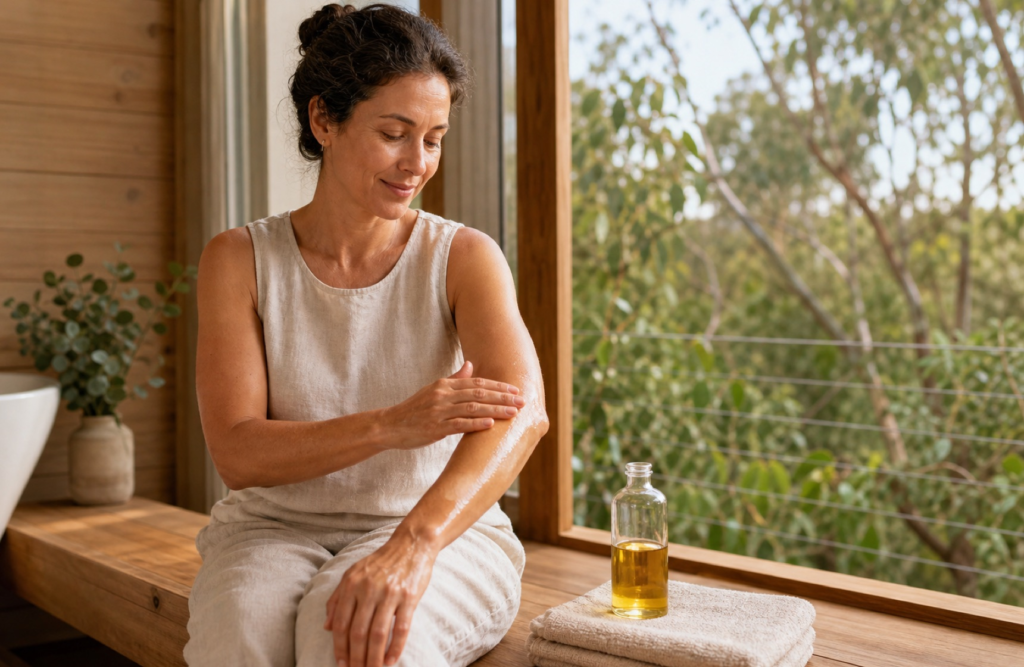
There is something quietly powerful in the simple act of touching our own skin with care. In the midst of busy Australian days — with their early starts, long commutes and constant movement — many of us notice a subtle dryness in the body or a restlessness in the mind. The skin may feel tight, the thoughts scattered, and a sense of being ungrounded lingers even after a full night’s sleep.
Ayurveda offers a beautiful, time-honoured practice to meet these experiences with tenderness: abhyanga, or oil self-massage. This daily ritual involves gently massaging warm oil into the skin before bathing. Far more than a beauty treatment, abhyanga is a profound act of self-nourishment that supports physical balance, calms the nervous system and reconnects us with our own bodies.
In a culture that often values doing over being, this simple practice invites us to slow down and offer ourselves the same care we might extend to someone we love. It is one of the most accessible and deeply rewarding elements of a daily routine.
The Ancient Practice of Abhyanga
Abhyanga has been part of Ayurvedic daily living for thousands of years. It is considered an essential component of dinacharya, the rhythmic routines that help maintain health and harmony. The word itself comes from the Sanskrit roots meaning “to move toward” or “to smear,” reflecting the way oil is lovingly applied to the entire body.
Traditionally, this practice is recommended each morning, though it can also be done in the evening to support rest. The warmth of the oil, combined with the rhythmic touch, penetrates the skin and reaches deeper tissues, helping to loosen accumulated tension and nourish from within. It is a ritual that honours the body as sacred rather than something to be maintained or fixed.
How Oil Self-Massage Supports Balance
In Ayurvedic understanding, the skin is not just a covering but a living organ of absorption and connection. When we apply warm oil with steady, loving strokes, we bring qualities that counteract imbalance — warmth to coolness, moisture to dryness, and grounding to restlessness.
This practice is especially supportive for Vata energy, which tends toward dryness, lightness and movement. By adding oil and warmth, we help steady this dosha and prevent the scattered or anxious feelings that can arise when Vata becomes excessive. Yet abhyanga benefits all constitutions. It soothes Pitta’s intensity and supports Kapha’s natural stability without overwhelming it.
On a physical level, regular self-massage nourishes the skin, improves circulation and supports the body’s natural detoxification processes. On a deeper level, it calms the nervous system, helping the mind shift from scattered activity into a more settled state. Many people notice that after even a short session, they feel more present and less reactive to the day’s demands.
Choosing the Right Oil for You
The choice of oil can be tailored gently to individual needs and the season. Sesame oil is traditionally favoured for its warming and grounding qualities, making it wonderful during cooler months or when Vata feels heightened. Coconut or sunflower oil offers a lighter, cooling effect that can feel refreshing during hot Australian summers.
Some people enjoy adding a drop or two of calming essential oils, though the practice remains beautifully effective with plain, high-quality oil. The most important quality is that the oil feels nourishing and pleasant to the skin. There is no single “correct” choice — only what brings comfort and a sense of being cared for.
A Simple Daily Practice
Abhyanga does not require long periods of time or special skills. Even five to ten minutes can create meaningful shifts. The oil is gently warmed — either by placing the bottle in warm water or rubbing it between the palms — until it feels pleasantly warm to the touch.
Beginning at the head or the feet, the oil is applied with long, soothing strokes along the limbs and circular motions around the joints. The abdomen can be massaged in clockwise circles, following the natural direction of digestion. The practice is done with presence, allowing the hands to move slowly and attentively.
After the massage, it is traditional to allow the oil to absorb for a few minutes before showering with warm water. The warmth of the shower helps the oil penetrate further while gently cleansing the skin. Many people find that this ritual leaves them feeling both energised and deeply relaxed at the same time.
Benefits for Body, Mind and Spirit
Regular oil self-massage supports the body in numerous gentle ways. It helps maintain skin softness and suppleness, particularly in Australia’s drier climates or during windy seasons. It promotes better sleep when done in the evening and can support steadier energy throughout the day.
On the mental and emotional level, the rhythmic touch and warmth have a profoundly calming effect on the nervous system. This can be especially helpful during busy periods or times of transition, when the mind tends to race. The practice creates a daily moment of coming home to the body, fostering self-awareness and a quiet sense of being held.
Spiritually, abhyanga is an act of reverence. It reminds us that caring for the physical form is a sacred responsibility and a pathway to greater presence. In this way, the ritual becomes a moving meditation — a time when attention is fully given to the sensations of touch, warmth and breath.
Adapting to Australian Seasons and Lifestyle
The practice adapts beautifully to Australian conditions. In hot summers, lighter oils and shorter sessions prevent any sense of heaviness while still providing moisture. During cooler months or in windier regions, warming sesame oil and slightly longer massages offer deeper nourishment and protection from dryness.
For those with busy schedules, the ritual can be simplified without losing its essence. Massaging just the feet and hands before bed, or focusing on the limbs in the morning, still brings grounding and calm. Even on the busiest days, taking a few mindful minutes for self-touch can shift the quality of the entire day.
Mindfulness in the Ritual
The true power of abhyanga lies in the quality of attention brought to it. When performed mechanically, it remains beneficial. When done with presence — noticing the sensation of oil on skin, the warmth spreading, the breath flowing — it becomes a profound mindfulness practice.
This mindful touch helps cultivate self-compassion. Many people discover that the simple act of caring for their own body in this way softens self-criticism and deepens appreciation for the vessel that carries them through life. It is a quiet rebellion against the tendency to push through discomfort or neglect basic needs.
When Time is Limited
On days when a full-body massage feels impossible, small adaptations keep the spirit of the practice alive. A warm foot massage before sleep, gentle oil application to the face and neck in the morning, or even massaging the scalp with a few drops of oil can still offer nourishment and calm. The key is consistency offered with kindness rather than perfection.
A Gentle Invitation to Self-Care
Oil self-massage is not another task to add to an already full life. It is a returning — a way of remembering that the body deserves daily tenderness. In a world that often pulls us outward, this ritual draws us gently inward, creating a foundation of steadiness from which we can meet each day with greater grace.
You might begin with just a few minutes, using whatever oil feels pleasant and available. Notice how your skin responds, how your mind settles, and how the day unfolds afterward. Allow the practice to grow naturally from there, shaped by your own rhythms and needs.
As you explore this ancient yet timeless act of self-care, you may discover a deeper sense of being at home in your body. The skin becomes softer, the mind quieter, and a quiet strength begins to emerge from within. May each application of warm oil be a small reminder that you are worthy of this loving attention — one breath, one stroke, one moment of presence at a time.
This article is for educational purposes only and is not intended as medical advice. Please consult a qualified healthcare professional for any health concerns.